Avil Milk: The Authentic Malabar Drink – History, Ingredients & Recipe
Posted on September 30, 2025 · Updated August 2026 · by Avilum Club
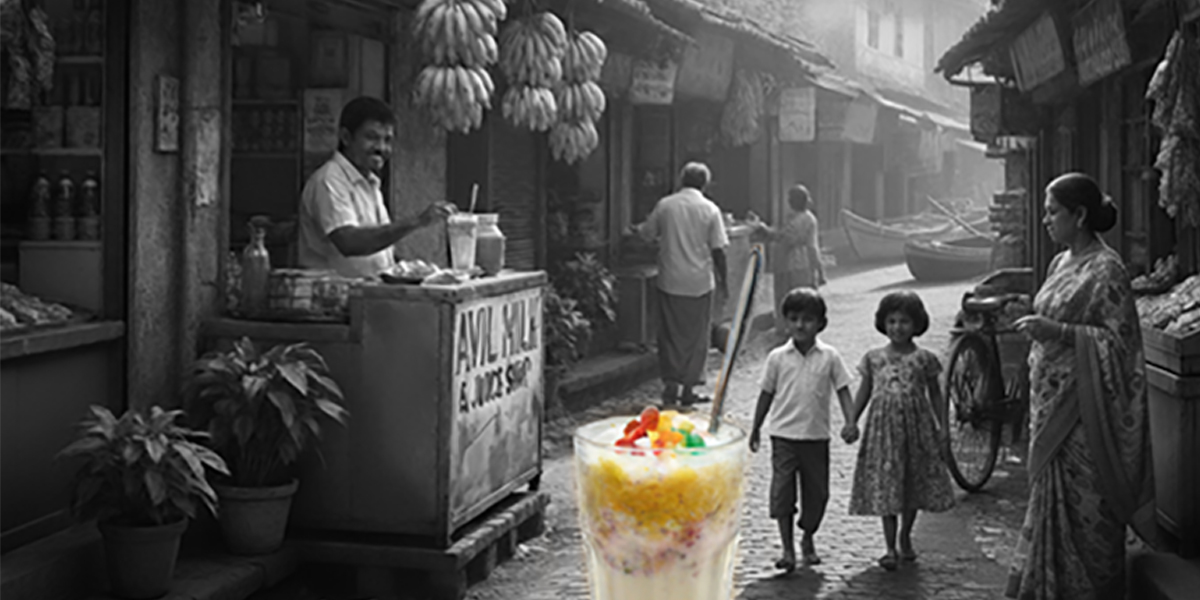
For those outside of Kerala, Avil Milk might be an unfamiliar name. But for anyone in the Malabar region, those two words evoke a feeling of comfort, energy, and pure satisfaction. It is not just a beverage. It is a cultural staple — served at roadside stalls, carried home in paper cups by school children, and remembered by anyone who grew up in Malabar.
This article is the complete guide to Avil Milk: what it is, where it came from, how to make it at home, and why it remains so special to Malabar.
What Is Avil Milk?
Avil Milk (also spelled Aval Milk) is an iconic traditional dessert-drink and nourishing snack originating from the Malabar region of northern Kerala, India. At its core, traditional Avil Milk is a layered, unmixed drink served in a tall glass, built with specially roasted flattened rice flakes (avil or aval), ripe banana, chilled milk, crunchy peanuts, and sweet raisins.
Unlike a conventional milkshake, juice, or smoothie, Avil Milk has a distinct multi-textured character. You get the crunch of crisp roasted avil, the soft sweetness of banana, the creaminess of milk, and the bite of nuts and raisins all in one glass. It is eaten with a spoon as much as it is drunk, earning its famous reputation across Kerala as "a snack in a cup."
In Kerala food culture, Avil Milk occupies a special place alongside culinary icons like sulaimani tea and pazham pori (banana fritters) — simple in ingredients, deeply satisfying, and inseparable from the everyday life and roadside street food culture of Malabar.
"In Malabar, you don't just drink Avil Milk — you experience it. It's a crunchy, creamy, full meal in a glass."
The Origins of Avil in Malabar
To understand Avil Milk, you first need to understand avil — the flattened rice at the heart of the drink.
In earlier generations across Malabar, avil was one of the most practical foods available. It needed no cooking. It was affordable, filling, and could be prepared in seconds. As an evening snack, avil was commonly mixed with grated coconut and jaggery, and eaten by hand. This preparation was known as Avilum Thengayum or Avil Kuzhachathu.
Another popular variation was Avilum Vellam — avil mixed with banana, dry fruits, and sometimes small slices of onion, combined with water. It was humble, nourishing, and deeply local.
Avil also held ceremonial significance. In many parts of Malabar, it was traditional to serve avil with water when a new well was dug. Avil mixtures were offered as prasadam in local temples. It was a food that belonged to the rhythms of daily Malabar life.
Over time, Avilum Vellam evolved. Milk replaced water. Dry fruits were added more generously. And crucially — the avil began to be specially roasted before being added to the glass. This roasting step transformed the drink. The roasted flattened rice (known locally as fried avil or kizhi avil) gave the preparation its signature crunch, aroma, and flavour — and Avil Milk as we know it today was born.
How Avil Milk Became a Malabar Favourite
The story of Avil Milk spreading across Malabar is tied to a very specific kind of place: the thattukada — the roadside food stall that has always been the backbone of Kerala's street food culture.
Towns like Kottakkal became particularly well known for their Avil Milk culture. By the evening, a line would form at the popular stalls. School children on their way home. Workers ending a long shift. Families passing through town. Everyone stopped for Avil Milk.
The drink worked for everyone because it solved a real problem: it was affordable, filling, and fast to prepare. A single glass of Avil Milk could hold off hunger for hours. It wasn't a luxury item. It was the people's drink.
Each stall had its own small variation — a different balance of banana to avil, more sugar or less, extra cashews or peanuts. But the soul of the drink remained the same: layered ingredients in a tall glass, served cold, eaten with a spoon.
What Are the Ingredients in Avil Milk?
Traditional Avil Milk uses simple, natural ingredients — most of which can be found in any Kerala kitchen. Here is what goes into a classic glass:
| Ingredient | Role in the Drink |
|---|---|
| 🌾 Roasted flattened rice (avil / aval / poha) | The base — provides crunch, texture and a nutty aroma |
| 🍌 Ripe banana | Natural sweetness and a soft, creamy contrast to the crunch |
| 🥛 Milk / milk solids | Brings everything together; provides the creamy "milk" in Avil Milk |
| 🥜 Peanuts | Added crunch and protein |
| 🍇 Raisins | A natural touch of sweetness and chewiness |
The key to an authentic Avil Milk is the quality of the roasted avil. The flattened rice must be properly roasted to develop the signature crunch and aroma that make this drink so distinctive. Soft or unroasted avil simply does not deliver the same experience.
🛒 Avilum Club Classic Blend — Exact Ingredients
These are the real ingredients inside each Avilum Club Classic Blend pack:
Special Avilum Club Roasted Flattened Rice
Avil / Poha — roasted the traditional Malabar way
Banana
Natural sweetness, soft texture
Milk Solids
Included in the mix — just add cold water
Peanuts
Crunch and protein
Raisins
Natural sweetness and texture
No artificial flavours. No preservatives. Just the real Malabar mix.
How to Make Traditional Avil Milk (Kerala Recipe)
Making Avil Milk at home is straightforward, but the preparation of the roasted avil requires some attention. Here is a step-by-step traditional Malabar Avil Milk recipe:
Ingredients (Serves 2)
- 1 cup thick flattened rice (avil / aval)
- 1 ripe banana, sliced
- 1.5 cups cold milk
- 2 tablespoons sugar (adjust to taste)
- 2 tablespoons roasted peanuts
- 1 tablespoon cashew nuts (lightly roasted)
- 1 tablespoon grated or thin-sliced dried coconut
- A pinch of cardamom powder (optional)
- Ice (optional, for a cold version)
Method
- Roast the avil: Heat a dry pan over medium flame. Add the flattened rice and roast, stirring continuously, until it turns light golden and releases a nutty aroma — roughly 5 to 7 minutes. Do not let it brown too much. Set aside to cool completely.
- Roast the nuts: In the same pan, lightly roast the cashews and peanuts for 2–3 minutes until golden. Set aside.
- Prepare the glass: Add sugar to cold milk and stir until dissolved. Pour into two tall glasses (or one large glass).
- Layer the ingredients: Add sliced banana pieces to the glass first. Then add the roasted avil on top. Finally, top with the roasted peanuts, cashews, dried coconut, and a pinch of cardamom if using.
- Serve immediately: The beauty of Avil Milk is in that first moment — the avil is still crunchy before the milk softens it. Serve right away with a spoon and enjoy.
💡 Traditional Tip
In Malabar, avil is often purchased pre-roasted from the local shop, where it is roasted to order. If you are making it at home, let the avil cool completely before assembling the drink, or it will turn soft too quickly.
What Makes Malabar Avil Milk Different?
There are many rice-flake drinks and snacks across South India. But Malabar Avil Milk has specific qualities that set it apart:
- The roasted avil: Unlike simple beaten rice preparations where the avil is soaked or mixed raw, Malabar Avil Milk uses avil that is dry-roasted first. This creates a deep, nutty crunch that you cannot get any other way.
- The layered structure: Traditional Avil Milk is not blended or stirred together. It is presented as distinct layers in a tall glass — banana at the bottom, avil in the middle, nuts and coconut on top, milk poured over. Each spoon gives you a different combination.
- The texture contrast: The combination of crunchy avil, soft banana, cold milk and chewy coconut gives it a multi-texture experience that makes it genuinely satisfying in a way that a simple drink cannot match.
- It is eaten, not just drunk: You need a spoon. You slow down. It is a moment of pleasure, not just a thirst quench.
Avil Milk vs Aval Milk – What Is the Difference?
If you have seen both "Avil Milk" and "Aval Milk" used, you might wonder if they are different drinks. They are not. Avil Milk and Aval Milk refer to the same preparation.
The difference is purely linguistic:
- Avil is the word used primarily in northern Kerala, particularly in the Malabar region (Kozhikode, Malappuram, Kannur, Kasaragod districts).
- Aval is the word more commonly used in central and southern Kerala, and in Tamil Nadu.
- Outside of Kerala, the same ingredient is called poha (Hindi), chira (Bengali), or simply flattened rice in English.
When you search for Avil Milk Kerala or Aval Milk recipe, you are looking for exactly the same thing. The Malabar version — made with roasted avil, cold milk, banana, and nuts — is simply the most famous and deeply rooted regional variation.
Traditional Avil Milk vs Instant Avil Milk
For generations, Avil Milk was only available one way: freshly made at a thattukada. You had to be there. Today, Instant Avil Milk brings that experience to anywhere you are.
| Traditional Avil Milk | Instant Avil Milk Mix | |
|---|---|---|
| Preparation | Roast avil, prepare ingredients, assemble layers | Open packet, add cold water, ready |
| Time required | 15–20 minutes | Under 60 seconds |
| Where available | Local thattukadas, Malabar towns | Anywhere — home, travel, office |
| Ingredients | Fresh, sourced locally, assembled fresh | Pre-measured, pre-roasted, naturally preserved |
| Shelf life | Must be consumed immediately | Long shelf life, travel-friendly |
| Authentic taste | ✅ Yes | ✅ Yes — when made with real Malabar ingredients |
What Is Instant Avil Milk?
Instant Avil Milk is a ready-to-prepare mix that contains all the core ingredients of a traditional Avil Milk — specially roasted avil, banana, milk solids, peanuts and raisins — measured and packaged together. You simply add cold water, and the drink is ready in under a minute.
The concept came from a genuine need. People who grew up in Malabar, and later moved to other cities or countries, had no way to experience Avil Milk outside of their hometown. The preparation was too specific. The ingredients were not easily available. And even if you found them, roasting avil properly took skill and time.
A good Instant Avil Milk mix solves this by doing the preparation work in advance — but preserving the authentic ingredients and the experience of the drink itself.
Avilum Club Classic Blend — What's Inside
Specially sourced and roasted the traditional Malabar way. Just add cold water.
Frequently Asked Questions About Avil Milk
Is Avil Milk healthy?
Avil Milk is a nutritious traditional snack. Flattened rice is a source of easily digestible carbohydrates. Banana provides potassium and natural sugars. Milk adds calcium and protein. The nuts contribute healthy fats. When made at home or with a quality mix, it is a wholesome, energy-rich snack without artificial additives.
What type of avil is used in Avil Milk?
Thick flattened rice (also called thick aval or kallu avil) is traditionally preferred. It holds its texture better after roasting and does not go soggy in milk as quickly as thin flattened rice. The roasting process is what really distinguishes Malabar Avil Milk from other flattened rice drinks.
Can you make Avil Milk without milk?
Yes. The predecessor to Avil Milk — Avilum Vellam — was made with water instead of milk. You can prepare a dairy-free version using cold water, coconut water, or plant-based milk. The flavour will be lighter, but the texture experience remains largely the same.
Where is Avil Milk most popular?
Avil Milk is most deeply associated with the Malabar region of Kerala — particularly Malappuram district and towns such as Kottakkal, Tirur, and Kondotty. It is also found across Kozhikode, Kannur and Kasaragod. It is less commonly found outside northern Kerala.
Is Avil Milk the same as Poha Milk?
They use the same base ingredient — flattened rice (poha in Hindi, avil in Malabar Malayalam, aval in Tamil and southern Kerala). But Avil Milk is a specific Malabar preparation with roasted avil, banana, milk, and nuts. It is distinct from simple poha preparations which are typically savoury dishes.
How long does Avil Milk last?
Traditional Avil Milk must be consumed immediately after preparation. Once assembled, the avil begins to absorb the milk and soften within minutes. This is why it was always served fresh at the stall. Instant Avil Milk mixes, on the other hand, have a long shelf life when kept dry and sealed.
Experience Authentic Avil Milk with Avilum Club
Traditional Avil Milk has always been loved for its combination of roasted avil, ripe banana, cold milk, and crunchy nuts — a flavour that belongs to Malabar. For generations it was available only on the streets of Kottakkal and Tirur. Avilum Club was built to change that.
Our Classic Blend Instant Avil Milk Mix brings the authentic Malabar recipe into a convenient pack. Every ingredient — the specially roasted avil, banana, milk solids, peanuts and raisins — is prepared the traditional way and packed at source. Add cold water, and your Avil Milk is ready in under a minute.
It is designed for people who grew up with Avil Milk and want that taste back — wherever they are in the world. And for those discovering Avil Milk for the first time, it is the easiest place to start.
Classic Blend Instant Avil Milk Mix
Authentic Malabar recipe. Ready in 60 seconds. Just add cold water.
₹69
🛒 Buy Now — ₹69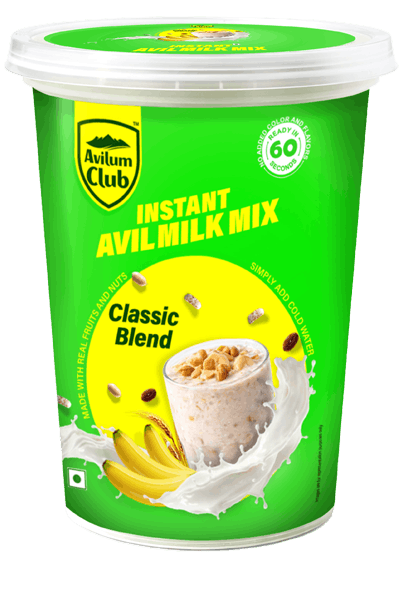
Read next: The Health Benefits of Avil Milk · The History & Malabar Story Behind Avil Milk


